Remembering history vs voyeurism
Having been part of the problem by visiting, I’d like to ponder at the implications of buying a ticket.
Ethics is a big topic on this website, and I walk a fine line between standing my grounds and « YOLO » most of the time… but some topics are meant to be discussed properly and this is one of them.
For example, the Paris catacombs are made of real-life dead bodies, and yet it is one of the biggest public attractions of the city. Comparatively, Auschwitz turned into a weird historical Disneyland, complete with influencers.
And it doesn’t sit well with me.
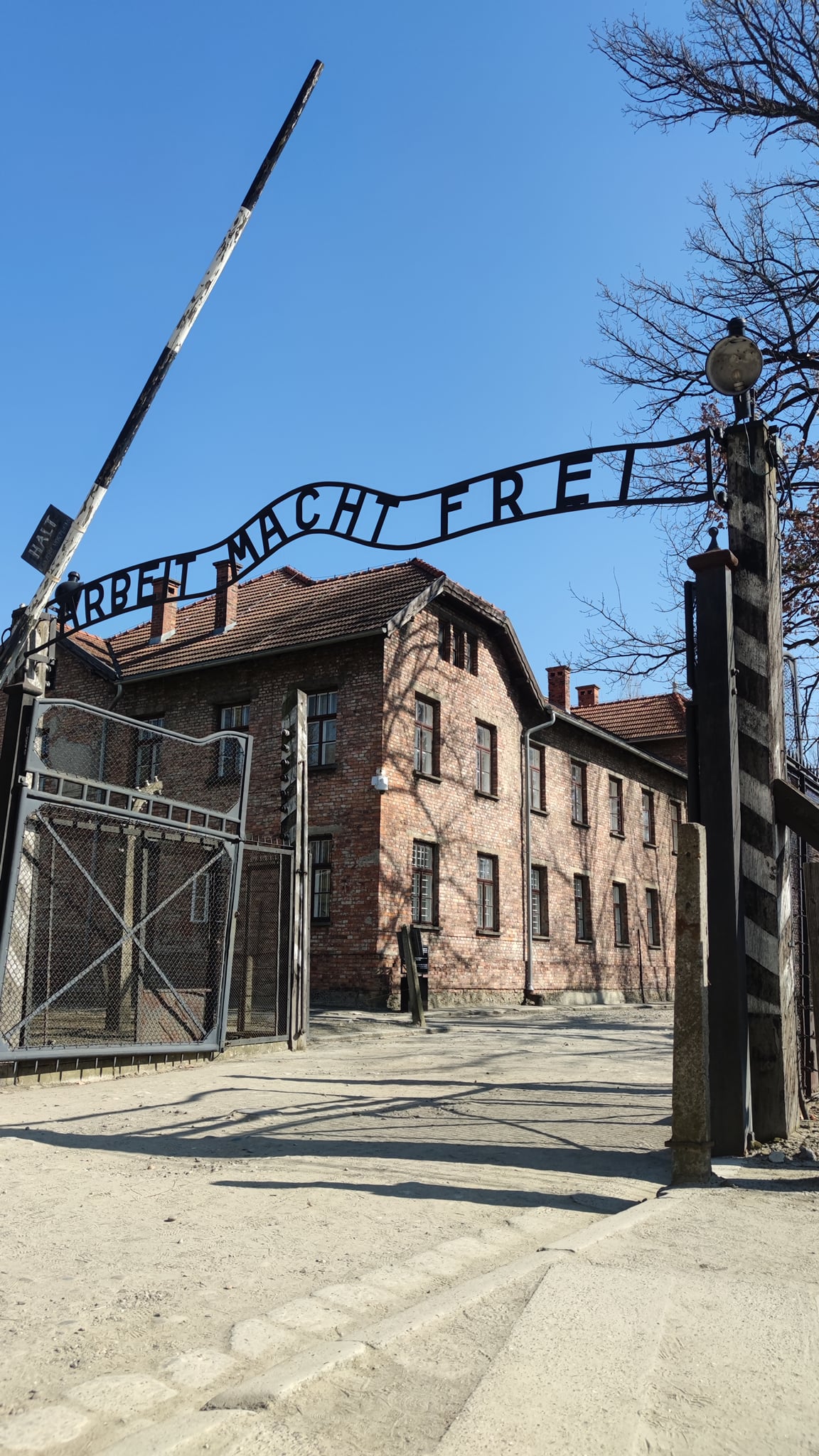
Auschwitz : a rushed encounter with horror
I’m not going to lie, I was expecting to be completely emotionally destroyed upon visiting.
I thought I would break down…
I have no idea if it was almost « sold out » the day we got there or if it’s always this way, but we had to go through security, then get an audioguide to follow our guide in the barracks.
One group entered, one guide explained everything in a very monotone voice, and then another group followed.
Within about 10 minutes, there would be 4 groups of about 30 people each visiting one room.
It didn’t leave any time to really «dwell in the moment and imagine the atrocities that happened » as you immediately had to exit the place and go to another barrack.
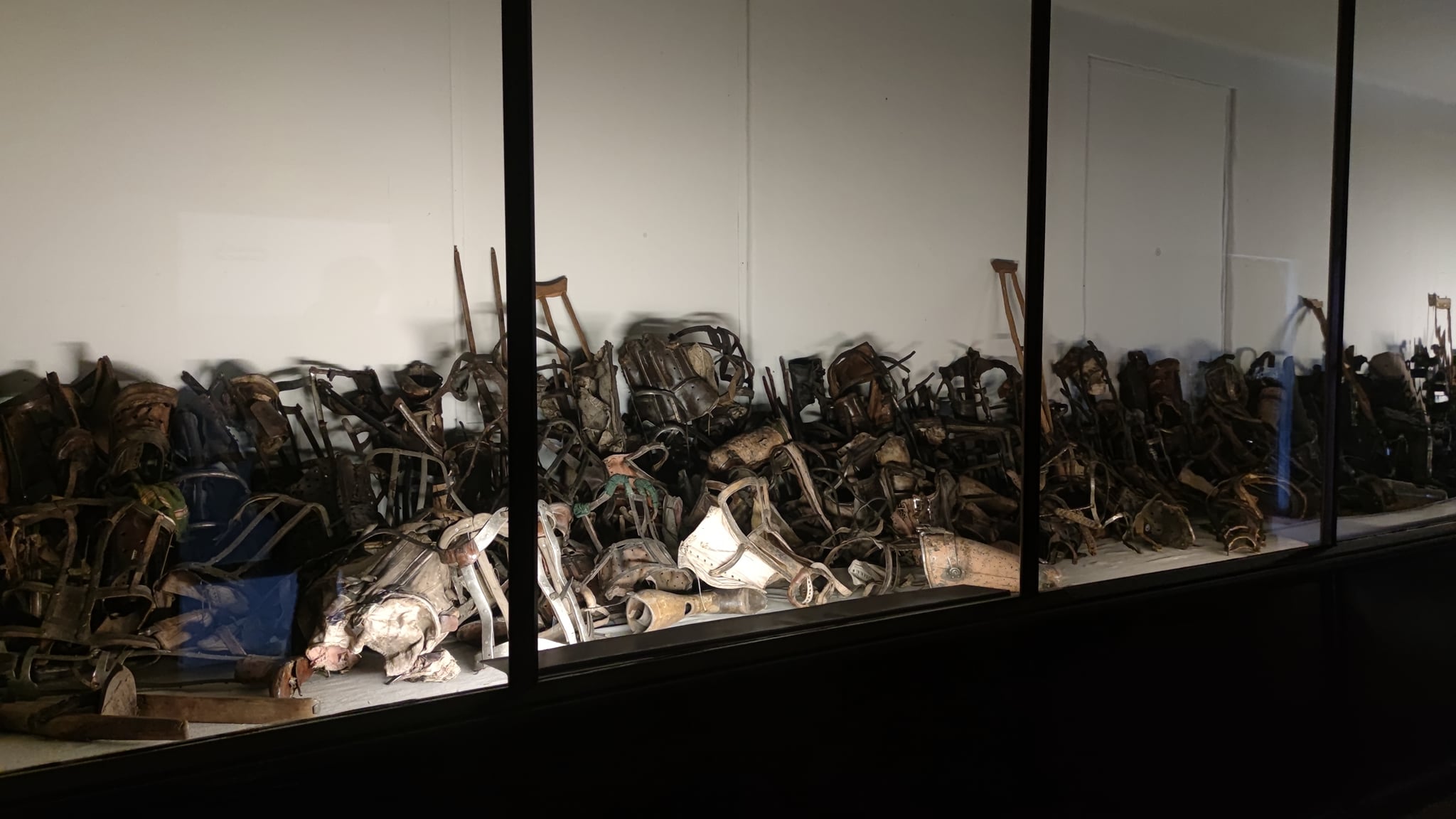
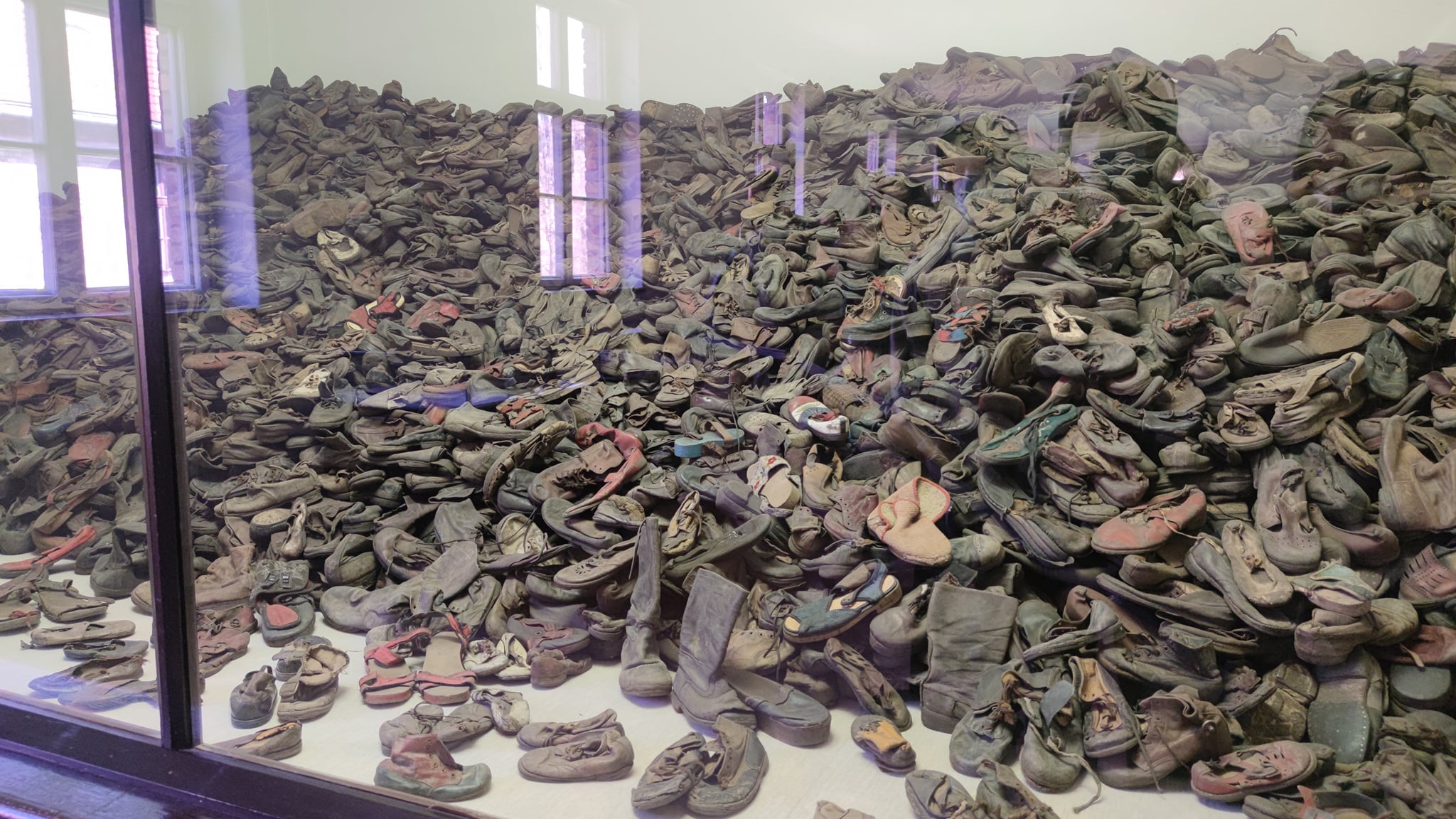
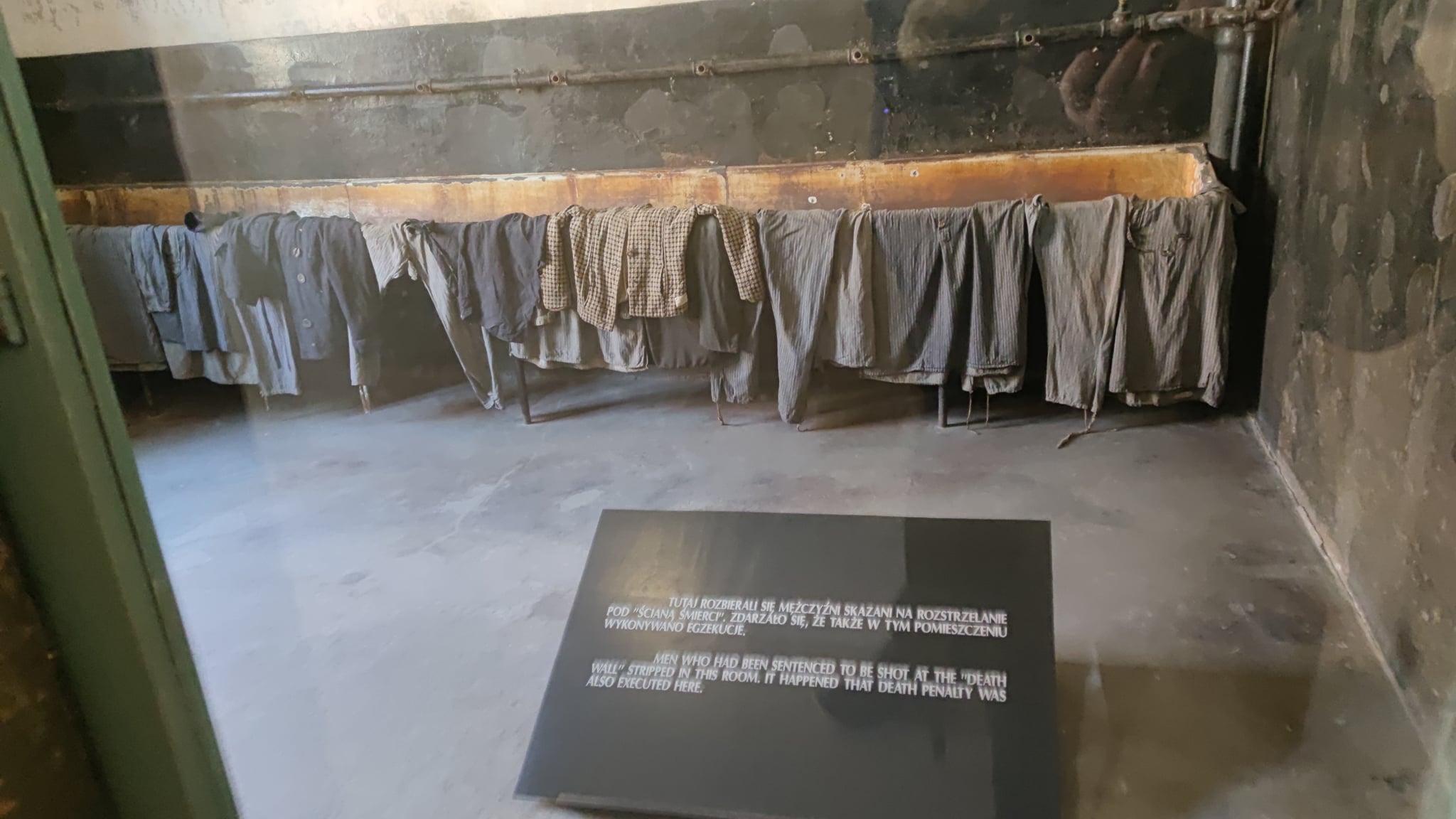
We did see horrendous things, such as a room filled with female hair that they shaved off to make clothing with, or one only made of children’s shoes, collected upon their deaths.
There were thousands of those.
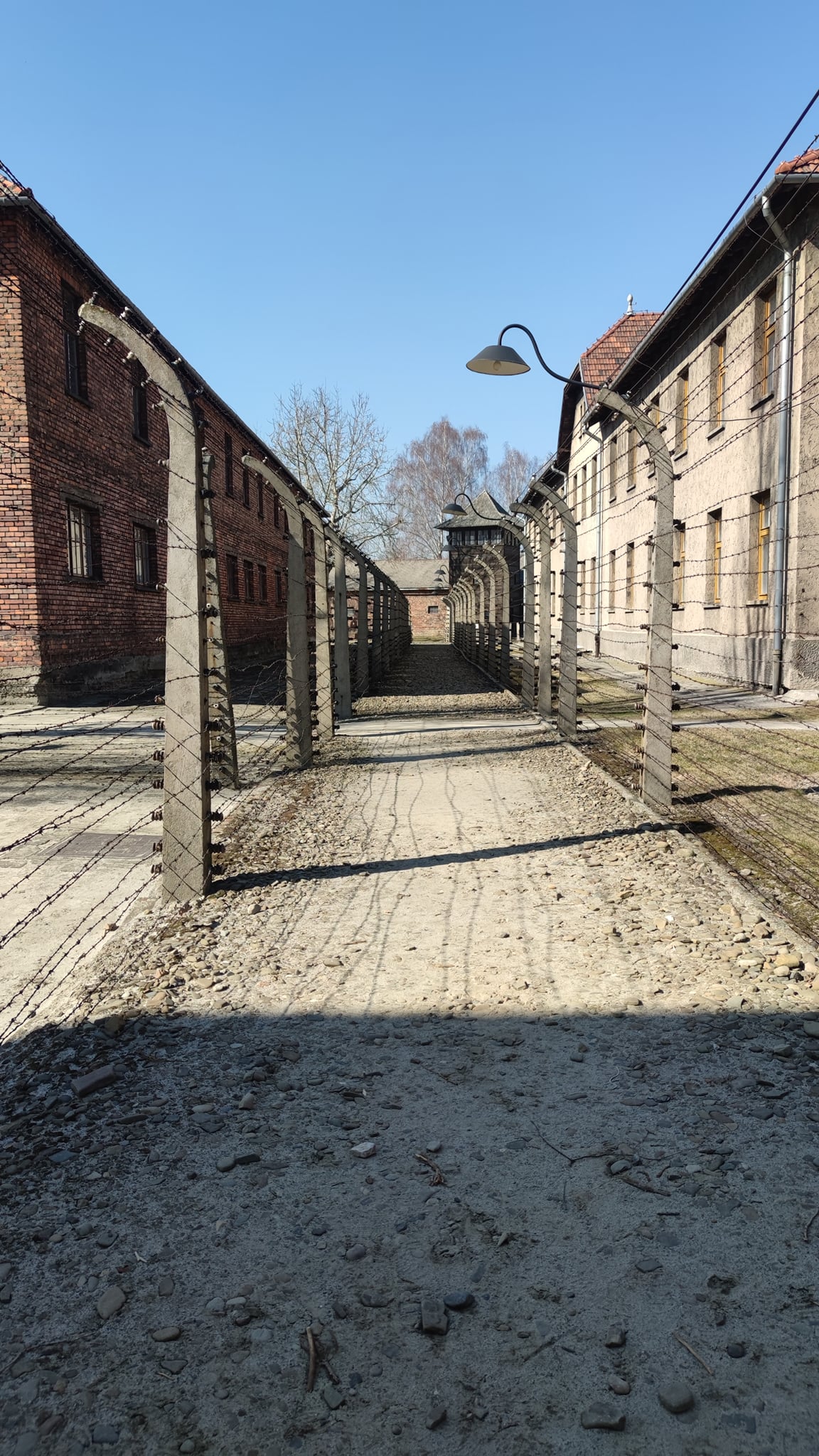
But again, with the pace and monotone voice of the guide, it didn’t let you experience the true horrors that were done to those poor people as you were off to the execution wall already, or to the hanging poles, or the gas chambers… and then had to exit because you only had 10 minutes to get to Birkenau. Everything went too fast.
It shouldn’t feel like going out of the haunted mansion. And yet…
Birkenau : where the silence speaks
There is no transfer from Auschwitz to Birkenau. It is a 3 km walk, or a 5/10€ taxi drive.
We got there before anyone else, and had finally some time to realize where we were, and the atmosphere got heavy really fast.
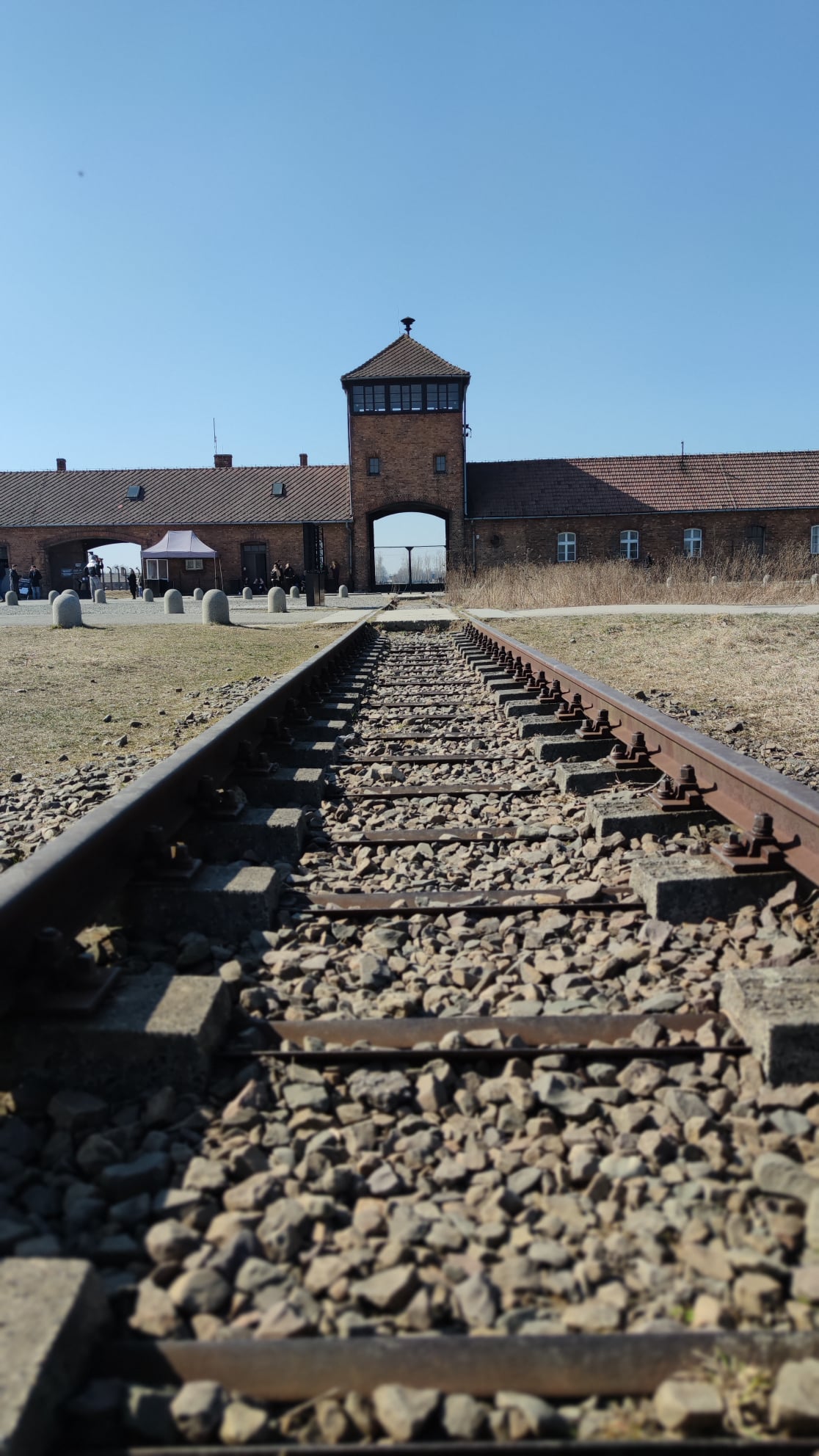
We took the mandatory picture of the infamous train tracks and the guide joined us soon after with the group.
Everything was quieter and felt darker there.
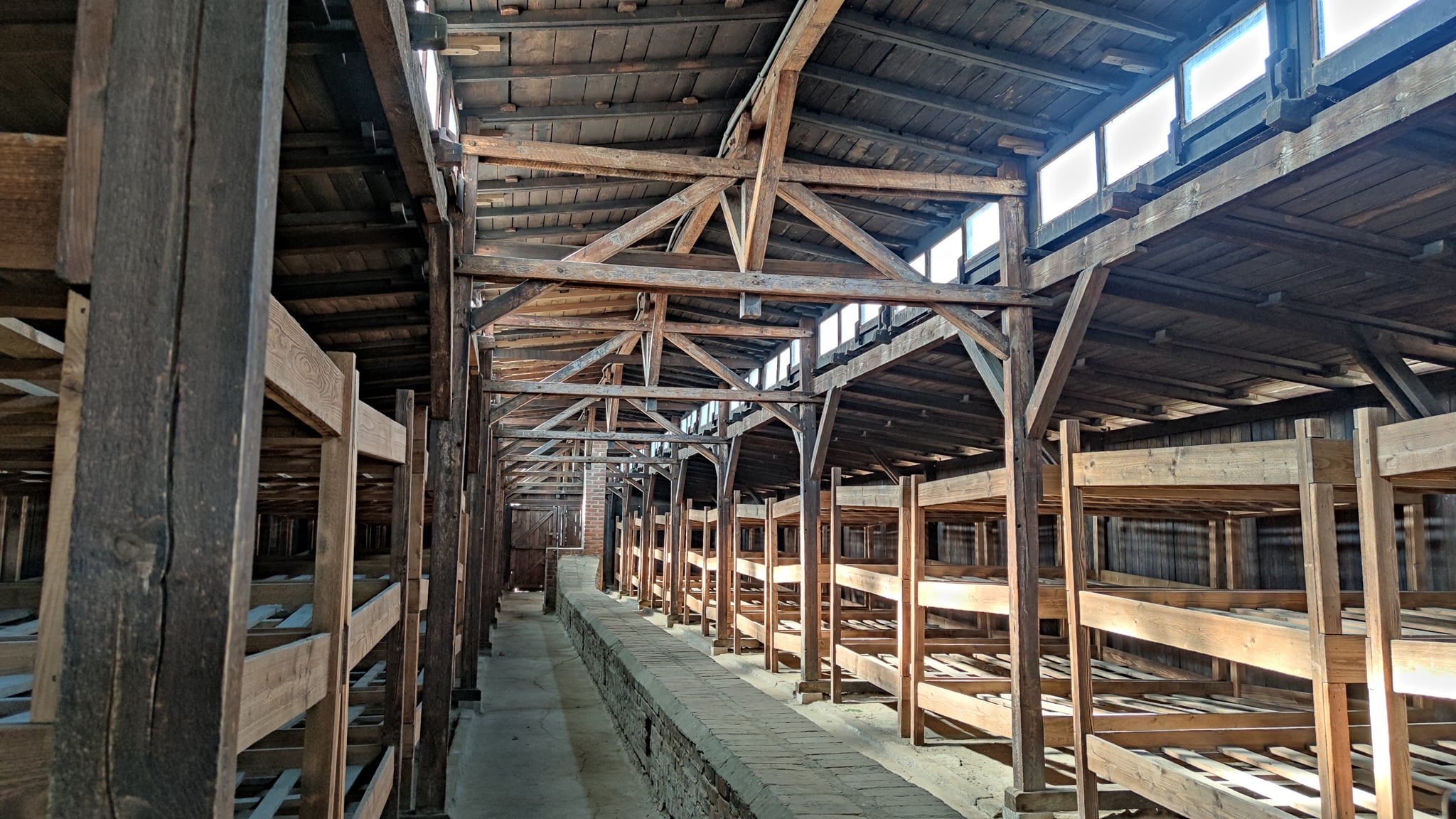
We visited the houses that housed up to 400 people back when the camp was at its most crowded.
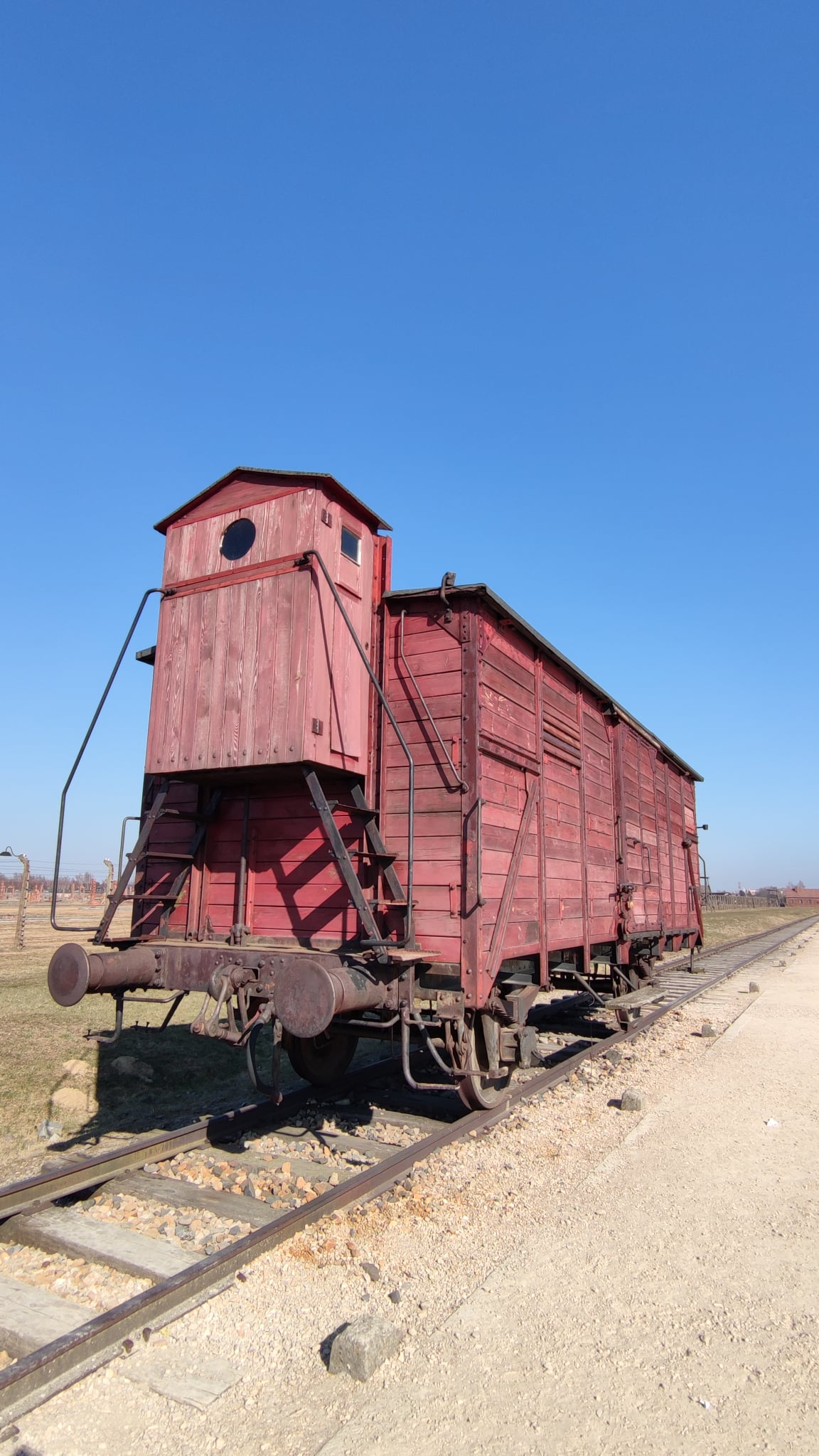
We walked past a train wagon replica that held up to 70 people for up to 10 days without food or water.
Most of them arrived dead, and the ones that didn’t pass away during the trip were selected upon arrival to either go to the camp, or… walk about 2kms straight to the gas chambers.
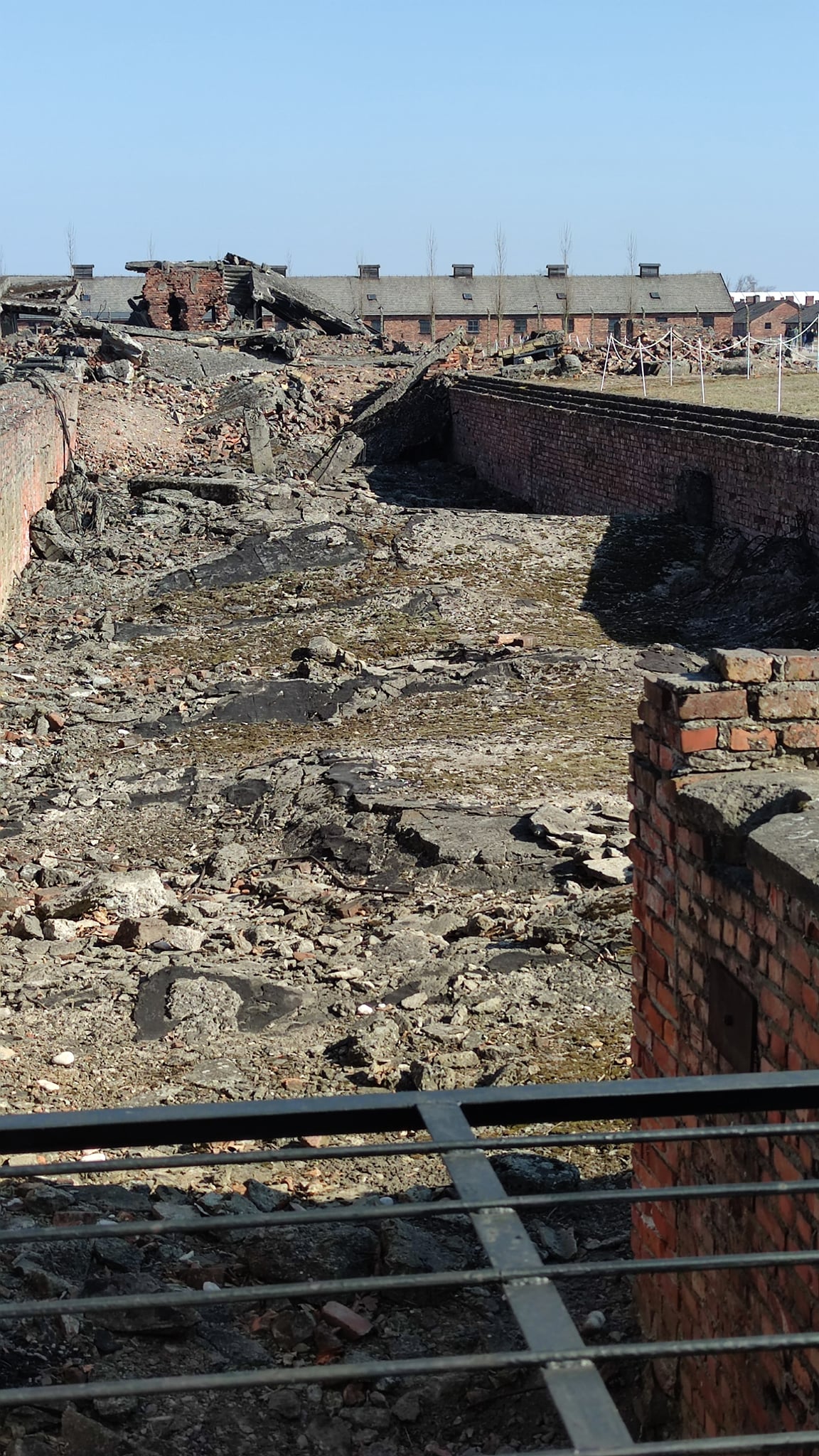
They weren’t told those were gas chambers of course. On site they are as they were back when the Germans destroyed them to pretend they never existed, shattered.
The guide made us do the walk from the train to the chambers in complete silence to really understand the fear the people went through as we walked in their footsteps.
It was painfully heavy, knowing the outcome.
They would then arrive at the entrance, have to strip naked, fold their own clothes, and the ones of their children, as the nazis told them they would get them back afterwards, and were then guided to the gas chambers to be executed.
The bodies were later sorted and the hair and gold teeth were taken out, before they would dispose of the remains (in mass graves at first, and after a while in the crematoriums as the number of bodies grew).
The tour concluded in front of the commemorative statue, and the guide left us on site to wander before leaving.
I don’t know if it was because there weren’t many people around in Birkenau, but it felt, to us, way more difficult than Auschwitz.
Beyond the camps : the forgotten gestapo prison
Most people just go straight to the camps, assuming they will see everything there.
In Krakow, there is a very small museum on Pomorska street which costs 6€ per person and explains how Poland was taken over by nazis. At the end, they take you to visit the nazi gestapo prison.
You get to see the last words of the many people who died there, or later on in the camps, carved into the walls.
It is a very interesting part of history, as it was the beginning of the hellish journey of many Polish people, and it is sadly often missed.
The voyeurism issue
That being said, the line between voyeurism and history is very thin there.
As mentioned prior, many influencers take selfies or do cute poses there.
I know they are mostly young and don’t realize the reality of it all, but still.
People were abused, tortured, and murdered there. It’s not a photolocation.
Imagine in just 80 years, people who would visit the United States and pose in front of Alligator Alcatraz (if they don’t destroy the evidence by then, of course). The feeling is the same.
It’s hard to end this article, because i don’t know whether I should advise you to visit the place or not.
History is currently repeating itself, so remembering what happened is very important… but on the other hand, you need to go there for the right reasons.
Auschwitz isn’t a destination, it’s a graveyard.
Treat it with the same attitude you’d use for a regular one.